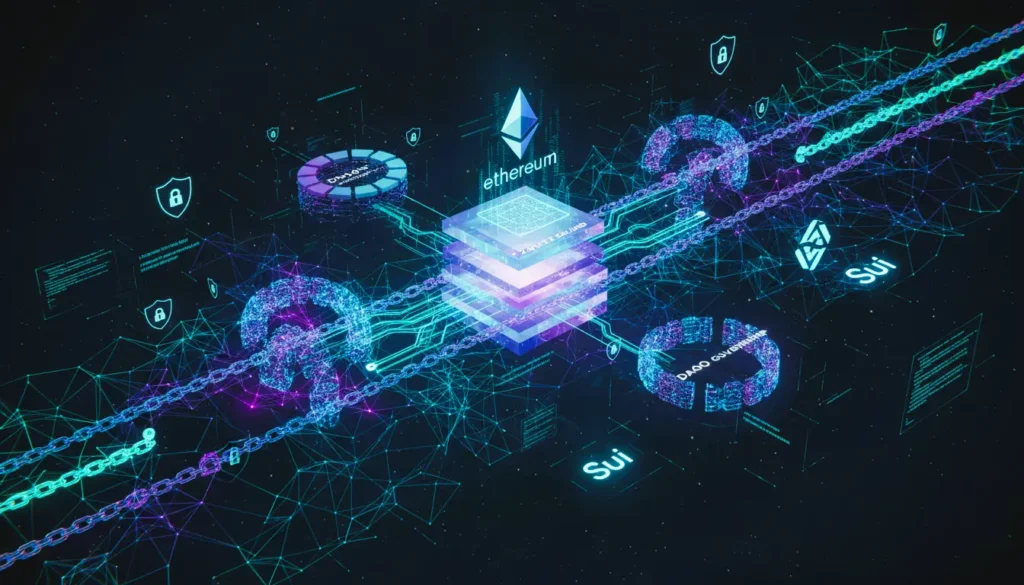
The advanced blockchain course helps you master complex protocols, smart contracts, and Web3 projects with hands-on, real-world training. The transition from a junior developer to a Web3 architect requires more than just writing code; it requires mastering system efficiency and cross-chain logic. Our advanced blockchain course is designed for professionals ready to tackle the scalability trilemma and build industrial-grade decentralized infrastructure.
Beyond the Basics: Advanced Smart Contract Engineering
In a mature market, functional code is the bare minimum. High-stakes environments demand optimization and rigorous defense mechanisms.
1. Gas Optimization and EVM Deep Dives
Understanding the Ethereum Virtual Machine (EVM) at the bytecode level is what separates elite developers. This module focuses on:
- Opcodes and Stack Manipulation: Writing efficient logic to minimize transaction costs.
- Memory vs. Storage: Strategic data handling to reduce on-chain footprints.
- Assembly (Yul): Implementing low-level code for maximum performance.
2. Smart Contract Security and Formal Verification
Exploits in 2025 and 2026 have proven that “testing” is not enough. You will learn:
- Reentrancy and Logic Attacks: Identifying complex vulnerabilities before deployment.
- Formal Verification: Using mathematical proofs to ensure contract correctness.
- Automated Auditing Tools: Mastering Slither, Echidna, and Mythril for continuous security.
Mastering Layer 2 Scaling and Interoperability
As the mainnet becomes a settlement layer, the real action happens on scaling solutions. This professional blockchain training provides hands-on experience with:
Zero-Knowledge (ZK) Rollups and Privacy
Learn to implement zk-SNARKs and zk-STARKs to provide transaction privacy and massive scalability. We cover the integration of ZK-proofs into enterprise dApps, ensuring data remains confidential while staying verifiable.
Cross-Chain Protocols and Bridges
The future is multi-chain. We explore the architecture of LayerZero, Polkadot, and Cosmos, teaching you how to build “Omnichain” dApps that function across disparate networks without compromising security.
Protocol Governance and Tokenomics Design
An architect must understand the “why” behind the “how.” We dive into:
- DAO Governance: Building robust voting systems and treasury management.
- Algorithmic Tokenomics: Designing sustainable economic models that prevent “death spirals.”
- On-chain vs. Off-chain Logic: Determining which parts of your business logic belong on the ledger.
Frequently Asked Questions (FAQ)
What are the prerequisites for this advanced blockchain course? Participants should have a strong grasp of Solidity (or Rust/Go), experience deploying at least one dApp to a testnet, and a solid understanding of web development (React/Node.js).
Will I learn about non-EVM chains like Solana or Sui?
Yes. While the EVM is a primary focus, this course includes dedicated modules on Rust for Solana and Move for Sui to ensure you are a versatile cross-chain engineer.
Does this course cover AI integration in Web3?
Absolutely. We explore how to use decentralized oracles (like Chainlink) to feed AI-driven data into smart contracts and how to manage AI model ownership via NFTs.
My Strategic Recommendations for Quality:
- The “Portfolio Audit”: Don’t just give a certificate. Have a final project where students perform a mock security audit on a “vulnerable” DeFi protocol. This is a massive selling point for employers.
- Focus on MEV: Include a section on Maximal Extractable Value (MEV). Understanding how searchers and bots interact with the mempool is a hallmark of truly advanced knowledge.
- Real-world Incident Studies: Analyze recent real-world hacks (from the past 12 months) to show students exactly how theory applies to live-fire scenarios.