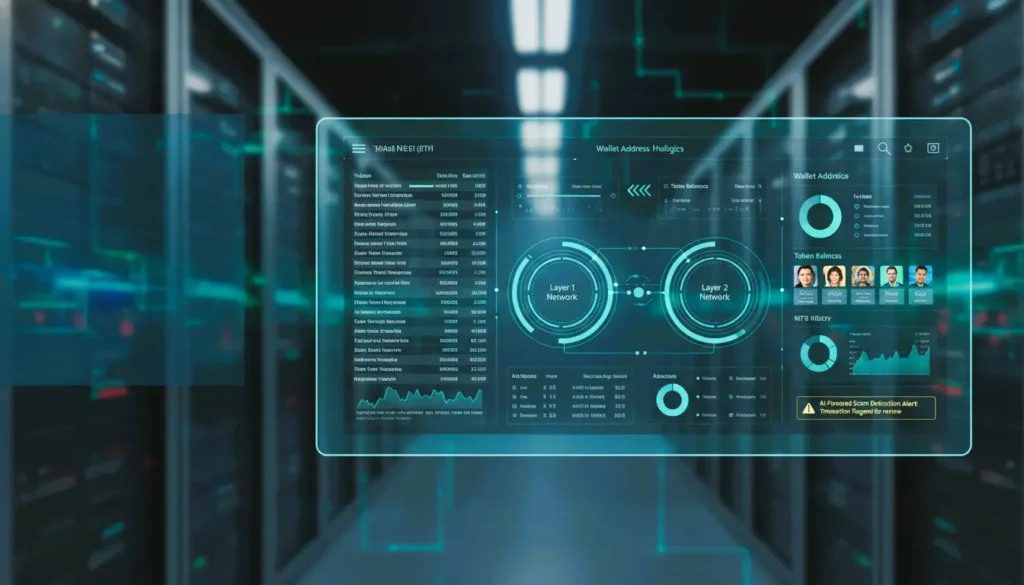
A blockchain explorer is the search engine of the decentralized world. It allows anyone to view real-time data on transactions, wallet balances, and smart contract interactions. For a Certified Blockchain Expert, these tools are not just for tracking payments—they are essential for auditing protocol health, verifying supply chain data, and conducting forensic analysis on digital assets.
How a Blockchain Explorer Works
A blockchain explorer functions by indexing the data from a specific blockchain network and presenting it in a human-readable format. Whether you are using Etherscan, Solscan, or a private ledger viewer, the core architecture remains the same.
1. Real-Time Transaction Tracking
Every time a transaction is broadcast to the network, the blockchain explorer displays its status (Pending, Successful, or Failed).
- Transaction Hash (TxHash): The unique fingerprint of a single transaction.
- Gas Fees: Real-time data on how much it costs to interact with the network.
- Block Height: The specific block number where the data is permanently stored.
2. Wallet and Asset Analysis
By entering a public address, you can view the entire history of that wallet. An expert uses this to:
- Verify Balances: Confirming holdings of native coins and custom tokens.
- Track Token Flow: Identifying where large “Whale” transactions are moving to predict market trends.
- NFT Provenance: Checking the original creator and ownership history of digital collectibles.
The Expert Perspective: Advanced Explorer Utilities
Beyond checking a balance, a certified blockchain expert leverages these tools for deep-tier technical verification.
Smart Contract Auditing and Verification
High-quality explorers allow you to “read” and “write” to smart contracts directly. Experts use this feature to:
- Interact Without a UI: Executing functions directly on the ledger if a project’s website goes down.
- Check Verification Status: Ensuring that the source code on the explorer matches the deployed bytecode to prevent “rug pulls.”
- Analyze Event Logs: Monitoring specific triggers within a contract to ensure automated business logic is functioning correctly.
Layer 2 and Cross-Chain Exploration
In 2026, the ecosystem is fragmented across various scaling solutions. Professionals now use multi-chain explorers to track assets as they move through bridges and across Layer 2 networks like Arbitrum, Optimism, and ZK-rollups.
Why Every Certified Blockchain Expert Needs These Tools
Certification proves you have the knowledge; the blockchain explorer provides the evidence.
- Transparency: Proving to clients that funds are stored in multisig wallets.
- Security: Identifying suspicious “Approval” transactions that could lead to drained wallets.
- Compliance: Providing auditable trails for tax and regulatory requirements in a “trustless” manner.
Frequently Asked Questions (FAQ)
What is the best blockchain explorer to use? It depends on the network. Etherscan is the standard for Ethereum, Solscan for Solana, and Blockchain.com for Bitcoin. Most experts use a combination of these or “aggregator” explorers for cross-chain data.
Is my personal information visible on a blockchain explorer? No. Explorers show public addresses (e.g., 0x123…), not your name or physical address. However, if your address is linked to a KYC-verified exchange, your identity could be traced by authorities or forensic experts.
Can a blockchain explorer stop a transaction? No. An explorer is a “read-only” tool. It shows you what is happening on the blockchain, but it has no power to alter, stop, or reverse the data on the ledger.
Why is my transaction “Pending” on the explorer? This usually means the gas price you set was too low for the current network traffic. The transaction is in the “Mempool” waiting for a miner or validator to include it in the next block.
Strategic Improvements for 2026:
- Focus on Privacy Explorers: Mention tools that help analyze “Zero-Knowledge” transactions. As privacy becomes a 2026 standard, understanding how ZK-proofs appear on-chain is a top-tier skill.
- AI-Powered Search: Highlight that modern explorers are integrating AI to flag “Scam Addresses” or “Bot Activity” automatically, saving experts hours of manual research.
- On-Chain Resume: If you are a Certified Blockchain Expert, your wallet history (visible on an explorer) is your true resume. Encourage readers to build a “clean” on-chain reputation.