Blockchain is more than just the foundation for Bitcoin; it is a revolutionary method of managing data through decentralization, security, and transparency. This blockchain tutorial, a W3Schools-style guide, will take you from the basic concept of “blocks” to the advanced implementation of smart contracts.
What is blockchain technology?
At its core, a blockchain is a distributed ledger technology (DLT). Unlike a traditional database controlled by a central authority (like a bank), a blockchain is shared across a global network of computers (nodes).
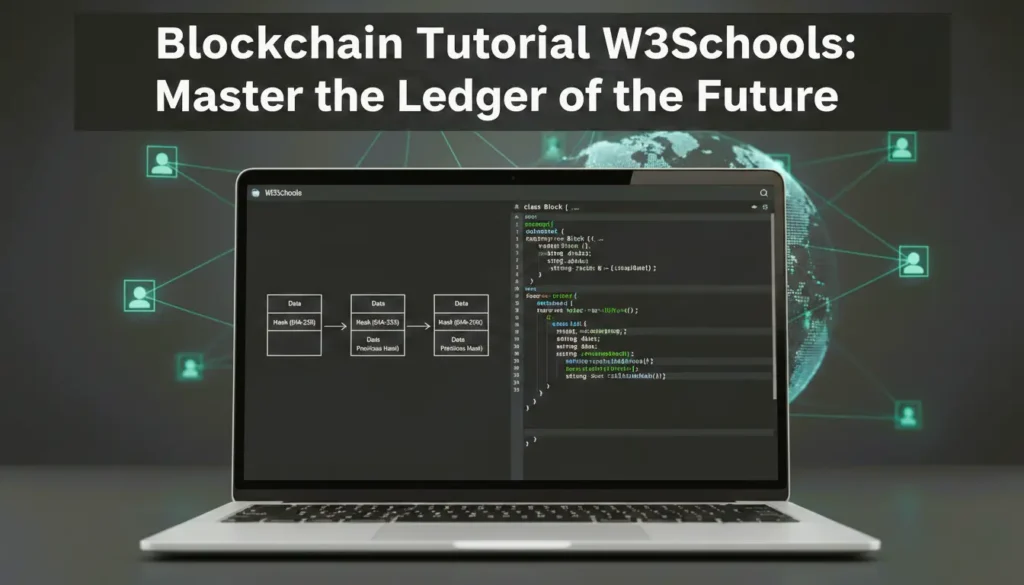
The Anatomy of a Block
Each block in a blockchain consists of three primary elements:
- The Data: Information regarding transactions (sender, receiver, and amount).
- The Hash: A unique “digital fingerprint” created by a cryptographic algorithm (usually SHA-256).
- The Previous Hash: This link creates the “chain,” ensuring that if one block is tampered with, all subsequent blocks become invalid.
Core Pillars of Blockchain Architecture
To understand the blockchain tutorial w3schools curriculum, you must grasp the three pillars that make the system immutable:
1. Decentralization
In a decentralized network, no single entity has control. Every node on the network has a full copy of the ledger. This eliminates the “single point of failure” found in traditional systems.
2. Transparency and Immutability
Once a block is added to the chain, changing it requires altering every subsequent block and gaining consensus from the majority of the network. This makes the data virtually permanent and tamper-proof.
3. Consensus Mechanisms
How do nodes agree on which transactions are valid?
- Proof of Work (PoW): Used by Bitcoin; requires “miners” to solve complex math problems.
- Proof of Stake (PoS): Used by Ethereum 2.0; validators are chosen based on the number of coins they hold.
Advanced Concepts: Smart Contracts and DApps
Moving beyond simple transactions, modern blockchain technology enables programmable logic.
Smart Contracts
These are self-executing contracts with the terms of the agreement directly written into lines of code. They run on the blockchain, meaning they are executed automatically when conditions are met, without the need for an intermediary.
Decentralized Applications (DApps)
DApps are applications built on top of a blockchain. They use smart contracts for their backend logic and often have their own tokens to incentivize network participants.
Short FAQs: Blockchain Tutorial
Q: Is blockchain the same as Bitcoin? A: No. Bitcoin is a cryptocurrency that uses blockchain technology as its underlying ledger. Blockchain is the technology, while Bitcoin is a use case.
Q: Why is blockchain considered secure? A: Security is derived from cryptographic hashing and consensus. To hack a blockchain, one would need to control more than 51% of the network’s computing power simultaneously.
Q: What programming languages are used for blockchain? A: Solidity is the primary language for Ethereum smart contracts. However, languages like C++, Go, and Rust are also widely used for building core blockchain protocols.
Q: Can a blockchain be private? A: Yes. While Bitcoin is a public blockchain, many enterprises use private (permissioned) blockchains where only authorized participants can join and view data.