What Is a Blockchain Explorer?
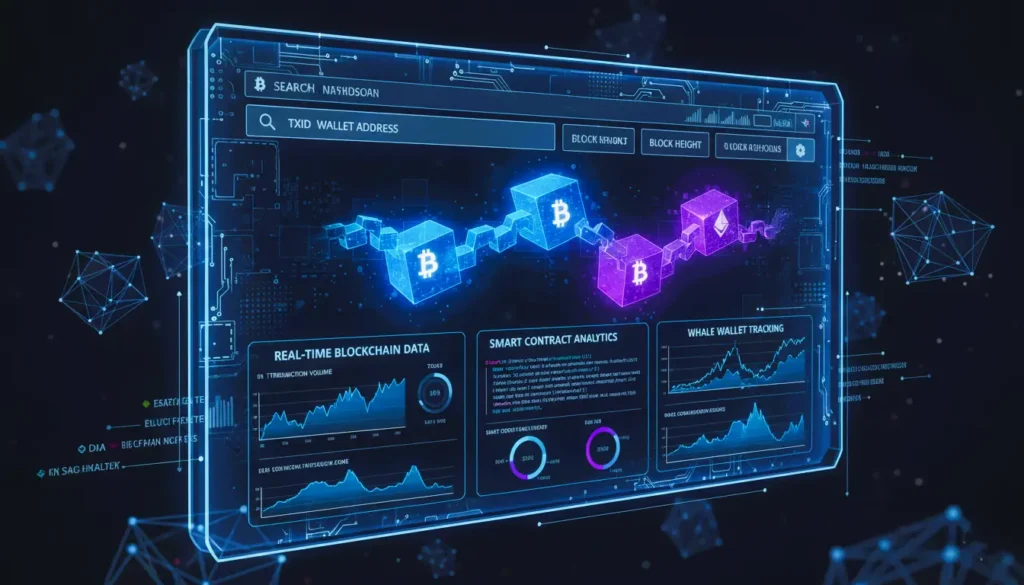
A blockchain explorer is the “Google of crypto.” It allows users to browse, search, and analyze every transaction, wallet, or block on a blockchain. Whether you are a casual holder or a high-frequency trader, explorers provide a source of truth for all digital movements.
These tools make complex blockchain data readable, giving transparency and security to users.
How a Blockchain Explorer Works
A blockchain explorer connects to a network node, indexes the blockchain data, and presents it in a human-friendly format. Key searchable metrics include the following:
- Transaction Hash (TXID): A 64-character identifier to track a specific transfer.
- Wallet Address: Reveals balances, incoming/outgoing history, and held tokens.
- Block Height: Displays all transactions in a specific block.
Why You Need an Online Blockchain Explorer
Using an explorer is essential for:
- Verifying transaction status without relying on third-party apps.
- Monitoring network health and fees, such as Ethereum gas rates.
- Security checks to prevent fraud or scams.
Verifying Transaction Status
Transactions on a blockchain go through three stages:
- Unconfirmed / Pending: In the mempool, waiting to be included in a block.
- Confirmed: Successfully added to a block.
- Finalized: Subsequent blocks ensure the transaction is irreversible.
Tip: Use network-specific explorers. Searching for a Solana transaction on Etherscan will fail.
Monitoring Network Health and Gas Fees
Many explorers provide real-time network metrics, including:
- Gas or fee rates
- Block times
- Transaction backlog
By checking these, you can time your transactions to reduce fees and avoid delays.
Popular Blockchain Explorers by Network
| Network | Top Explorer | Best Feature |
|---|---|---|
| Bitcoin | Blockchain.com | Easy-to-read charts & mining stats |
| Ethereum | Etherscan | Smart contract & DeFi tracking |
| Solana | Solscan | Fast updates for NFTs & SPL tokens |
| Multi-Chain | Blockchair | Privacy-focused searches across 20+ blockchains |
Advanced Features: Smart Contracts & Whale Watching
Smart Contract Interaction
For Ethereum and EVM-compatible chains, explorers allow users to read and write to smart contracts, interact with dApps, and verify project transparency.
Whale Monitoring & Token Analytics
Explorers track large wallets (“whales”) whose movements can influence markets. Users can:
- Check the rich list (top holders)
- Monitor circulating supply
- Analyze tokenomics for transparency
Visual Suggestion: Screenshot of a rich list or whale transaction alert on Etherscan.
FAQs About Blockchain Explorers
Q1: Is using a blockchain explorer free?
Yes. Most major explorers are free and web-based, earning revenue via ads and developer API services.
Q2: Can anyone see my wallet balance?
Yes. All transactions and balances are public. Names remain anonymous unless linked to a KYC exchange.
Q3: What is a block confirmation?
A confirmation occurs when a miner or validator adds your transaction to a block. Each additional block strengthens security and finality.
Q4: How do I monitor gas fees?
Check the explorer’s network metrics to see real-time congestion and adjust transaction timing.
Q5: Can I trust smart contracts on explorers?
Yes, explorers provide verified contract addresses and allow safe interaction, but always double-check addresses for authenticity.
Tips for Safe and Effective Use
- Always verify contract addresses before sending funds.
- Track minting and burning activity to understand supply changes.
- Monitor large transactions to anticipate market shifts.
- Use multi-chain explorers like Blockchair if you hold tokens on multiple networks.
Conclusion
A blockchain explorer is more than just a tool—it’s a critical asset for transparency, security, and market insight. By using the right explorer for your network, verifying transactions and contracts, and monitoring whales and network health, you can stay informed and secure in the decentralized world of crypto.