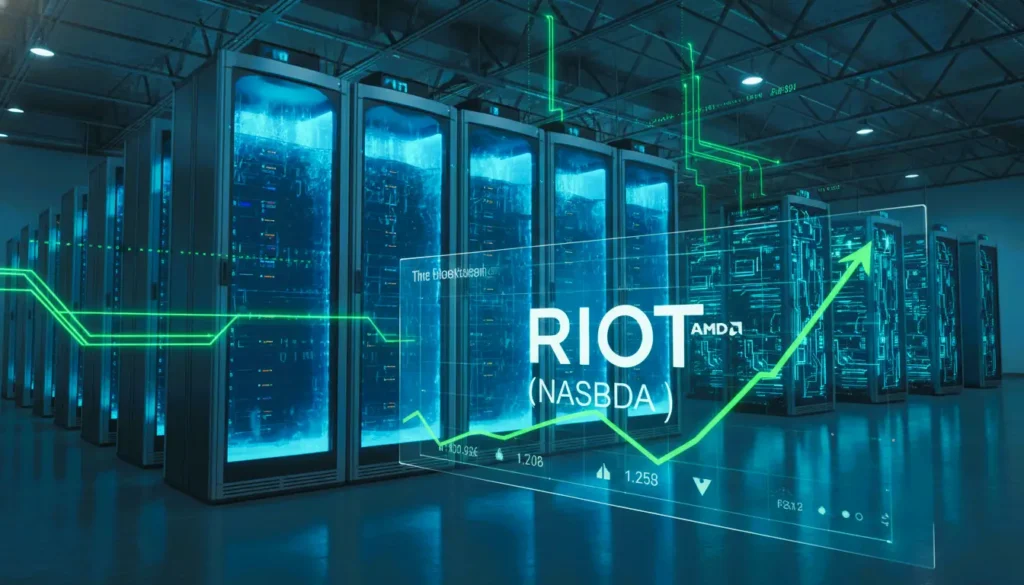
As of early 2026, the entity formerly known as Riot Blockchain has successfully transitioned into Riot Platforms, Inc. (NASDAQ: RIOT). This rebranding reflects a fundamental shift from a pure-play Bitcoin miner to a vertically integrated digital infrastructure powerhouse. While Bitcoin mining remains its core revenue driver, the company has diversified into high-performance computing (HPC) and AI hosting.
Today, Riot operates one of the world’s most sophisticated data center portfolios, leveraging over 1.7 GW of approved power capacity across its flagship sites in Texas and Kentucky.
Strategic Pivot: Why the Rebrand Matters
The change from Riot Blockchain to Riot Platforms was more than just a name change; it was a move to capture higher-margin compute workloads.
- Vertical Integration: By owning its electrical equipment manufacturer (ESS Metron), Riot controls its supply chain, reducing downtime and operational costs.
- Energy Arbitrage: Riot’s “power curtailment” strategy allows it to sell electricity back to the grid during peak demand, significantly lowering the net cost of mining.
- AI & HPC Expansion: In 2026, Riot officially entered the AI sector by leasing capacity to industry leaders like AMD at its Rockdale facility.
Operational Milestones and 2026 Hash Rate Targets
Understanding the value of Riot Blockchain in today’s market requires a look at its aggressive infrastructure expansion.
Mining Capacity and Hash Rate
By Q1 2026, Riot has set a target hash rate of 45 EH/s (exahashes per second). This massive computing power is distributed across three primary hubs:
- Rockdale, Texas: A 700 MW facility utilizing advanced immersion-cooling technology.
- Corsicana, Texas: A 1 GW site designed to be the largest Bitcoin-driven infrastructure platform in the world.
- Kentucky Facilities: 60 MW of air-cooled operations providing regional diversification.
The AMD Partnership: A 2026 Milestone
A pivotal moment for the company occurred in January 2026, when Riot signed a long-term lease with Advanced Micro Devices (AMD). This deal marked Riot’s official entry into the hyperscale data center market, utilizing 25 MW of critical IT load for AI-driven workloads. This move has decoupled Riot’s valuation from Bitcoin’s price volatility, providing more stable infrastructure-based revenue.
Financial Performance: RIOT Stock in 2026
The market’s perception of Riot Blockchain has evolved into seeing it as an “infrastructure play” rather than a speculative “crypto stock.”
| Metric (Feb 2026) | Value |
| Ticker Symbol | RIOT (NASDAQ) |
| Current Share Price | ~$16.30 – $17.10 |
| Market Capitalization | ~$6.35 Billion |
| Annual Revenue (TTM) | ~$637 Million |
| Bitcoin Holdings | 10,000+ BTC |
Frequently Asked Questions (FAQs)
Is Riot Blockchain the same as Riot Platforms?
Yes. In 2023, the company changed its name from Riot Blockchain to Riot Platforms to reflect its expansion into broader digital infrastructure, including electrical manufacturing and data center hosting for AI.
Where are Riot’s main mining facilities located?
Riot’s primary operations are in Texas (Rockdale and Corsicana) and Kentucky. The Corsicana facility is currently undergoing a multi-phase expansion to reach 1 gigawatt of total power capacity by the end of 2026.
How does Riot Blockchain make money besides mining?
Riot generates revenue through three main streams:
- Bitcoin Mining: Earning rewards for securing the Bitcoin network.
- Engineering Services: Manufacturing and selling electrical equipment through its subsidiary, ESS Metron.
- Data Center Hosting: Leasing power and space to third-party tenants, including AI firms like AMD.
What is “Immersion Cooling” in Riot’s facilities?
Immersion cooling involves submerging mining hardware in a specialized non-conductive liquid. This allows Riot Platforms to run their machines at higher speeds (overclocking) while significantly reducing noise and energy waste compared to traditional air fans.