Solana has redefined the limits of decentralized systems by prioritizing speed and scalability without sacrificing security. Unlike traditional blockchains that process transactions sequentially, Solana utilizes a unique set of innovations to handle over 65,000 transactions per second (TPS). This Solana blockchain tutorial focuses on the core architecture and the Rust-based development environment.
Why Developers Choose Solana
- High throughput: 65,000+ TPS with low latency
- Low transaction fees (<$0.01 per tx)
- Single-layer scalability without complex sharding
- Parallel smart contract execution (Sealevel)
- Ideal for DeFi, NFTs, and high-frequency blockchain apps
Why Solana?
Understanding the High-Performance Edge. For any developer starting a Solana blockchain tutorial, the primary question is, “How is it so much faster than Ethereum?” The answer lies in its eight core innovations, most notably Proof of History (PoH).
Popular Solana Projects
- DeFi: Serum, Raydium
- NFT Marketplaces: Magic Eden, Solanart
- Wallets: Phantom, Solflare
- Mobile Web3: Solana Saga smartphone
- Games & Metaverse: Star Atlas, Genopets
This shows readers practical applications of Solana.
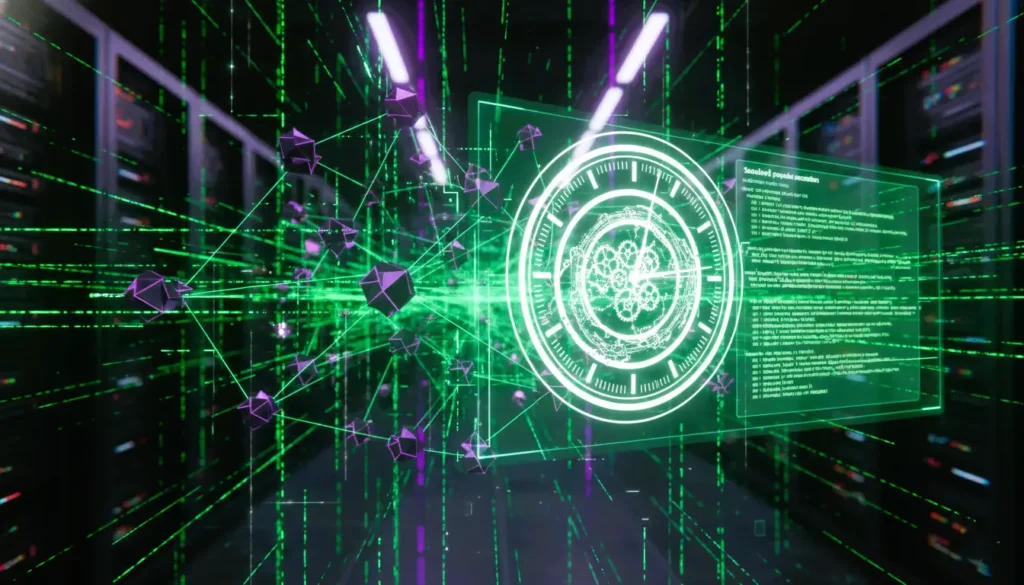
Proof of History (PoH): The Network Clock
PoH is not a consensus mechanism but a “cryptographic clock.” It allows nodes to agree on the time and order of events without having to communicate with each other constantly.
- Benefit: By creating a historical record that proves an event occurred at a specific moment, Solana reduces network overhead and latency.
Core Solana Architecture Components
- Proof of History (PoH): Cryptographic clock for transaction order
- Tower BFT: Optimized consensus layer for validator agreement
- Gulf Stream: Transaction forwarding and mempool optimization
- Turbine: Block propagation protocol for rapid network updates
- Sealevel: Parallel execution engine for programs
- Pipelining: Optimized transaction validation process
This helps beginners visualize the network flow.
Solana vs Other Blockchains
| Blockchain | TPS | Consensus | Language | Notes |
|---|---|---|---|---|
| Solana | 65,000+ | PoH + Tower BFT | Rust / C / Python | High-speed, Layer 1 scalability |
| Ethereum | ~15 | PoS | Solidity | Mature ecosystem, Layer 2 scaling needed |
| Avalanche | 4,500 | PoS | Solidity | Sub-second finality |
| Polygon | ~7,000 | PoS | Solidity | Layer 2 Ethereum scaling solution |
Tower BFT and Gulf Stream
Solana uses Tower BFT, a custom implementation of Practical Byzantine Fault Tolerance (PBFT) optimized for PoH. Additionally, Gulf Stream pushes transaction caching and forwarding to the edge of the network, allowing validators to execute transactions before the next block is even finalized.
The Solana Development Stack: Rust and Sealevel
Building on Solana requires a shift in mindset from the Ethereum Virtual Machine (EVM).
Parallel Smart Contract Execution (Sealevel)
Most blockchains are “single-threaded,” meaning only one smart contract can modify the state at a time. Solana’s Sealevel engine allows thousands of smart contracts to run in parallel, provided they don’t affect the same data.
Developing with Rust and Anchor
The primary language for this Solana blockchain tutorial is Rust.
- Programs, Not Contracts: On Solana, smart contracts are called “Programs.”
- Anchor Framework: This is the most popular framework for Solana development. It provides a suite of tools that handle the boilerplate code for security and serialization, making Rust development significantly more accessible.
Essential Tools for Solana Developers
- Solana CLI: Command-line interface to manage wallets, validators, and programs
- Anchor: Framework for simplifying Rust program development
- Solana Explorer: Monitor accounts, programs, and transactions
- Seahorse: Python SDK for prototyping Solana programs
- Phantom & Solflare: Popular Solana wallets for testing and deployment
Solana Accounts and Data Storage
A critical concept in any Solana blockchain tutorial is that Solana is stateless.
- Account-Based Model: Everything on Solana is an “Account.” Accounts store data, metadata, and executable code.
- Rent: To keep data on the blockchain, users must pay a small amount of “rent.” If an account maintains a minimum balance (rent-exempt), the data stays indefinitely.
How Solana Handles Data
-
Accounts: Store data, executable programs, and metadata
-
Rent Mechanism: Accounts pay a minimal fee to maintain data on-chain
-
PDAs (Program Derived Addresses): Deterministic accounts for program data
-
State Management: Stateless programs interact with accounts to persist state
Tips for Writing Programs on Solana
- Keep programs stateless and deterministic
- Minimize account interactions to save on rent and compute units
- Use Anchor macros to reduce boilerplate code
- Test programs locally using the local validator before mainnet deployment
- Audit programs using Solana security guidelines and external libraries
Beginner-Friendly Development Workflow
- Install Solana CLI and Rust toolchain
- Run a local validator for testing programs
- Write a program using Anchor or Rust
- Deploy to Devnet or Testnet
- Interact with programs via wallets like Phantom
- Move to Mainnet only after thorough testing
FAQs: Solana Blockchain Tutorial
Q: Is Solana faster than Ethereum 2.0?
A: Yes. While Ethereum 2.0 uses “Sharding” to scale, Solana scales on a single layer (Layer 1) using parallel processing, resulting in significantly lower latency and transaction costs.
Q: Do I need to know Rust to build on Solana?
A: While Rust is the industry standard for Solana, you can also use C or C++. Recently, Python (via Seahorse) has also become an option for those looking to prototype quickly.
Q: What is a “SOL” token used for?
A: SOL is the native token used to pay for transaction fees (gas) and for staking to secure the network. Because Solana is so efficient, transaction fees are typically less than $0.01.
Q: What is the Solana Saga?
A: The Solana Saga is a web3-native smartphone designed to make mobile DApp interaction seamless, featuring a “Seed Vault” for hardware-grade security.
Pro-Tip: The “Local Validator” Strategy
When following a Solana blockchain tutorial, don’t start by deploying to the mainnet. Use the Solana CLI to run a local validator on your machine. This allows you to test your programs in a perfect replica of the Solana network without spending a single SOL or needing an internet connection.
Conclusion
Solana’s high-speed, low-cost architecture makes it ideal for developers building DeFi, NFT, and gaming applications. By understanding PoH, Tower BFT, Sealevel, and the Rust-based development stack, you can deploy scalable programs and contribute to a rapidly evolving ecosystem. Start with a local validator, explore Anchor, and build confidently in the Solana ecosystem.