In the decentralized era, the ability to perform a blockchain explorer search is the digital equivalent of using a search engine for the world’s financial ledgers. Whether you are a trader verifying a high-stakes transfer or a developer auditing a smart contract, mastering the search function of a block explorer is essential for security and transparency.
What is a blockchain explorer search?
A wallet address tracker is the process of querying a distributed ledger’s database to retrieve real-time data. Unlike a private database, a blockchain is open-source and immutable. Explorers act as the “Google” of these networks, indexing every transaction, block, and wallet address.
Why Data Retrieval Matters
Without a reliable blockchain search tool, raw data on the chain is just a string of unreadable code. A search allows you to:
- Verify Transaction Status: Confirm if a payment is “Pending,” “Success,” or “Failed.”
- Audit Wallet Balances: View the exact holdings of any public address.
- Track Network Health: Monitor current gas fees, block height, and hash rates.
How to Conduct an Effective Blockchain Explorer Search
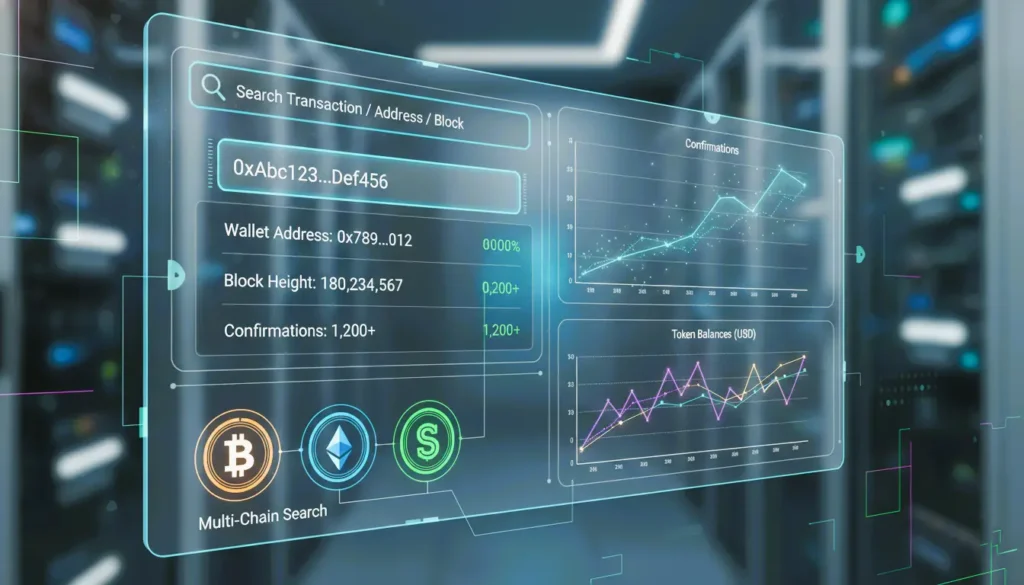
To get the most out of your crypto explorer search, you must know which parameters the search bar can recognize. Most modern explorers (like Etherscan, Mempool, or Solscan) support three primary inputs:
1. Searching by Transaction Hash (TxHash)
The TxHash is the unique digital fingerprint of a specific transaction.
- Use Case: “I sent 1 BTC to an exchange; is it there yet?”
- Action: Paste the long alphanumeric string into the search bar to see the number of confirmations and the exact timestamp.
2. Searching by Wallet Address
Every participant has a public crypto ledger explorer.
- Use Case: “I want to see my total NFT and token holdings across multiple networks.”
- Action: Entering an address reveals the transaction history, token list, and “Whale” status of that specific account.
3. Searching by Block Height
A block height refers to a specific “page” in the blockchain’s history.
- Use Case: “I want to see all transactions that occurred at exactly 2:00 PM yesterday.”
- Action: Search the specific block number to audit the network’s activity during that window.
Advanced Search Techniques for On-Chain Intelligence
For power users, a basic transaction tracker is just the beginning. 2026’s top-tier tools now offer “Global Search” capabilities.
Multi-Chain Search Functionality
In a fragmented ecosystem of Layer 1s and Layer 2s, users often need a multi-chain explorer. Tools like Blockchair or OKLink allow you to perform a single blockchain explorer search that scans Bitcoin, Ethereum, and Solana simultaneously. This eliminates the need to switch tabs when tracking assets across different protocols.
Smart Contract and Token Lookups
Searching for a token contract address is vital for avoiding scams.
- Pro Tip: Before interacting with a new DeFi protocol, search its contract address. A reputable explorer will show if the code is “Verified” and if there are any community-flagged security warnings.
Top Blockchain Search Tools in 2026
| Category | Recommended Tool | Core Strength |
| Bitcoin | Mempool.space | Visualizing real-time fee priority. |
| Ethereum | Etherscan.io | Gold standard for smart contract audits. |
| Multi-Chain | Blockchair | Privacy-focused cross-chain search. |
| EVM/Layer 2 | Blockscan | Unified search for Arbitrum, Base, and Optimism. |
Security Best Practices for On-Chain Searching
While performing a wallet address tracker is safe, your search history can reveal your intent to third parties.
- Avoid Public WiFi: When searching your own wallet addresses, use a VPN to prevent IP-to-address linking.
- Verify the URL: Ensure you are on the official explorer site. Phishing sites often mimic explorers to steal your private data.
- Use “Watch Lists”: Instead of searching manually every time, use the “Watch List” feature in your blockchain explorer tracker to get automated notifications.
Frequently Asked Questions (FAQs)
Q1: What is a blockchain explorer search?
A blockchain explorer search lets you query the blockchain to track transactions, wallet balances, and blocks in real time. It acts as a transparent, open-source ledger viewer.
Q2: Why should I use a blockchain explorer search?
It ensures security and transparency. You can verify transactions, audit smart contracts, track wallet activity, and avoid scams before sending funds.
Q3: What inputs can I search with?
You can search by Transaction Hash (TxHash), wallet address, or block height. Some advanced explorers also support multi-chain searches and token contract lookups.
Q4: Are blockchain explorer searches safe?
Yes, but you should always use official websites, avoid public WiFi, and consider a VPN when checking sensitive addresses to protect your privacy.
Q5: Can I track whales or large transfers?
Yes, top blockchain explorers allow you to monitor high-value wallets, receive alerts, and analyze transaction patterns for market insights.
Conclusion
Mastering a blockchain explorer search is essential for anyone serious about crypto. Whether you’re auditing transactions, verifying smart contracts, or tracking wallet activity, these tools turn raw blockchain data into actionable insights. By using reliable explorers and following security best practices, you gain full visibility over your digital assets and can make informed decisions with confidence.