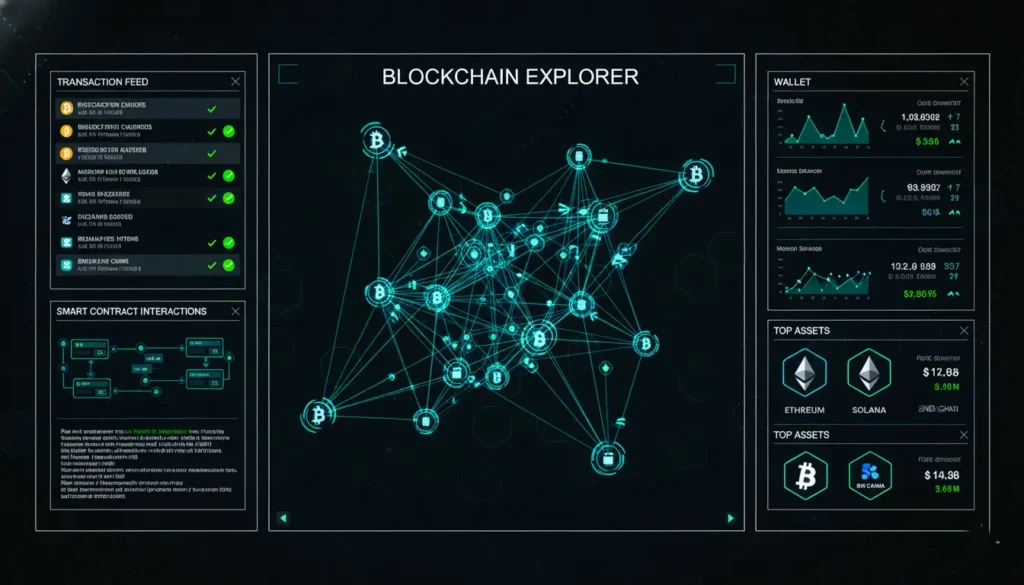
In the fast-paced world of digital assets, information is the most valuable currency. A blockchain explorer tracker is an essential tool that transforms raw, hexadecimal ledger data into a readable interface. Whether you are monitoring a personal portfolio, auditing a smart contract, or following “whale” movements, understanding how to navigate these trackers is a foundational skill for any crypto participant.
What is a blockchain explorer tracker?
A smart contract explorer is a specialized search engine for blockchain networks. It allows users to browse blocks, view transaction statuses, and analyze the history of specific wallet addresses. Unlike a private banking app, these trackers provide a transparent, 24/7 view of the entire network’s economic activity.
How Trackers Decode the Ledger
Blockchains are essentially public databases. The tracker “indexes” this database, allowing you to search for the following:
- Transaction Hashes (TxHash): Unique IDs for every transfer.
- Wallet Addresses: Public identifiers for participants.
- Block Heights: Specific “pages” in the blockchain’s history.
Core Features of an Advanced Blockchain Tracker
To get the most out of a crypto address checker, you must look beyond simple balance checks. Modern trackers offer deep analytical layers:
1. Real-Time Transaction Monitoring
The primary use of a blockchain analytics tool is verifying the status of a pending transaction.
- Pending: The transaction is in the “mempool,” waiting for a validator.
- Confirmed: The transaction is successfully added to a block.
- Failed: Usually due to “Out of Gas” errors or smart contract reverts.
2. Wallet and Portfolio Analysis
By entering a public address into the blockchain explorer tracker, you can see a comprehensive breakdown of assets. This includes native coins (like BTC or ETH) and secondary tokens (ERC-20, BEP-20, etc.).
3. Smart Contract Interaction
For DeFi users, trackers like Etherscan or BSCScan allow you to “read” and “write” to contracts directly. This means you can claim rewards or revoke permissions even if a project’s front-end website goes offline.
Why Use a Blockchain Explorer Tracker for Security?
Security is the most critical reason to master a transaction explorer. It acts as your “on-chain private investigator.”
Verifying Counterparty Legitimacy
Before sending funds, use the tracker to audit the recipient’s address.
- Age of Account: Is it a new account created minutes ago (a common red flag)?
- Transaction Volume: Does it have a history of legitimate activity?
- Flagged Status: Many trackers now include community labels for known phishing or scam addresses.
Tracking “Whale” Movements
Large-scale investors, or “whales,” can influence market prices. A blockchain explorer tracker allows you to set up alerts for specific high-value addresses, giving you a head start on potential market volatility.
[Image showing a whale alert notification from a blockchain tracking tool]
Popular Blockchain Explorer Trackers by Network
| Network | Recommended Tracker | Best For |
| Bitcoin | Blockchain.com / Mempool.space | Visualizing the mempool and fee spikes. |
| Ethereum | Etherscan.io | The gold standard for smart contract audits. |
| Solana | Solscan / Solana.fm | High-speed tracking for NFTs and SPL tokens. |
| BNB Chain | BscScan | Tracking low-fee DeFi and gaming assets. |
| Multi-Chain | DeBank / Zapper | Consolidating data across 50+ different chains. |
Advanced Tip: Using APIs for Automated Tracking
If you are a developer or a professional trader, you don’t have to check the blockchain explorer tracker manually. Most major explorers provide APIs (Application Programming Interfaces). This allows you to:
- Build custom dashboards.
- Get instant Telegram or email notifications for wallet activity.
- Automate tax reporting by exporting CSV files of every transaction.
FAQs for Blockchain Explorer Tracker
Q1: What is a blockchain explorer tracker?
A: A blockchain monitoring platform is a tool that allows users to search blockchain data, monitor wallet addresses, track transactions, and interact with smart contracts.
Q2: How does a blockchain explorer tracker work?
A: It indexes blockchain data like transactions, wallet addresses, and blocks, then presents it in a user-friendly interface for analysis and verification.
Q3: Why should I use a blockchain analytics tool?
A: To verify transactions, audit smart contracts, track wallet activity, monitor whales, and ensure security before sending or receiving crypto assets.
Q4: Can I interact with smart contracts through a blockchain explorer tracker?
A: Yes. Many trackers, like Etherscan or BscScan, allow users to “read” and “write” to contracts directly, even if a project’s front-end is down.
Q5: Are blockchain explorer trackers safe to use?
A: Yes. They are read-only tools that provide public blockchain data. However, always double-check wallet addresses before making transactions.
Q6: Can I track multiple networks with a single blockchain explorer tracker?
A: Some multi-chain trackers like DeBank and Zapper allow monitoring across 50+ blockchains, consolidating data for easier analysis.
Q7: Do blockchain explorer trackers offer automated alerts?
A: Yes. Many provide APIs or notification systems to alert users about wallet activity, high-value transfers, or pending transactions.