In the decentralized ecosystem, the blockchain explorer Ethereum is your most vital window into the network. As Ethereum continues to evolve with Layer 2 scaling and sophisticated smart contracts, knowing how to navigate an ETH block explorer is no longer optional—it is a foundational skill for verifying transactions, auditing portfolios, and interacting with the decentralized web.
What is a blockchain explorer for Ethereum?
An Ethereum DApp platform is a specialized search engine that indexes the entire history of the Ethereum network. It allows anyone to visualize real-time data from the ledger, including the following:
- Blocks: Groups of transactions added to the chain every 12 seconds.
- Transactions: Every movement of ETH or ERC-20 tokens.
- Smart Contracts: The underlying code for dApps and NFTs.
Why You Need an Ethereum Block Explorer
Unlike traditional banking, where records are private, Ethereum is public. An ETH explorer provides the transparency needed to confirm that a payment was actually sent, check current network congestion, or verify the legitimacy of a new token.
Key Features of a Top-Tier ETH Block Explorer
To rank as the best blockchain explorer Ethereum tool, a platform must offer more than just a search bar. In 2026, users prioritize these advanced features:
1. Real-Time Gas Tracker
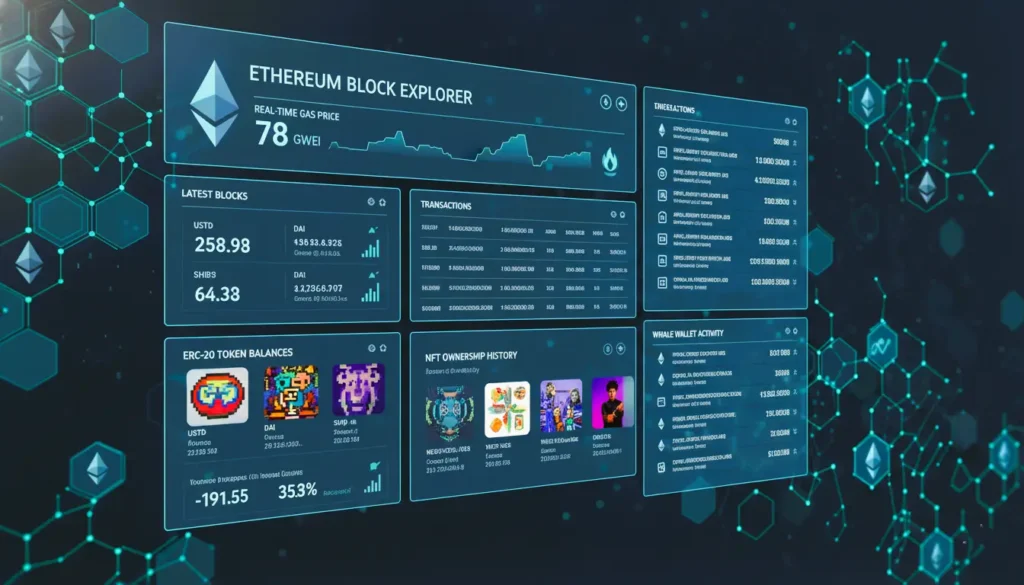
Before sending a transaction, check the integrated gas tracker. It displays the current cost in Gwei, helping you avoid overpaying or having your transaction “stuck” during high-traffic events like major NFT mints.
2. Token and NFT Analytics
A robust blockchain explorer, Ethereum, doesn’t just show ETH. It tracks:
- ERC-20 Tokens: Verifying balances of USDT, LINK, or UNI.
- ERC-721/1155 (NFTs): Viewing the provenance and ownership history of digital art.
3. Smart Contract Verification
For developers and security-conscious users, the “Contract” tab is essential. It allows you to see if a contract’s source code is “verified,” ensuring the code you interact with matches what was published by the creators.
How to Use an Ethereum Transaction Explorer
Tracking an individual transfer is the most common use case for a blockchain explorer on Ethereum.
Understanding the Transaction Receipt
When you paste a transaction hash (TxHash) into the explorer, you will see several critical fields:
- Status: Usually “Success,” “Pending,” or “Failed.”
- Block Confirmations: The number of blocks added since your transaction. More confirmations mean higher security.
- Value: The amount of ETH transferred.
- Transaction Fee: The actual cost paid to validators to process your request.
Top Blockchain Ethereum Tools in 2026
While Etherscan remains the industry standard, several alternatives offer unique advantages for specific needs:
| Explorer | Best For | Key Advantage |
| Etherscan | General Use | Most comprehensive database & labeled addresses. |
| Blockscout | Transparency | Fully open-source and easy for L2 integration. |
| BeaconScan | Staking | Specialized for Ethereum’s Consensus Layer (Proof of Stake). |
| Ethplorer | Portfolio Tracking | Visual charts for token balances and price history. |
| OKLink | Multi-chain Context | Excellent for tracking assets across different EVM chains. |
Advanced Analysis: Wallet Tracking and “Whale” Watching
Using a blockchain explorer for Ethereum allows you to perform “on-chain OSINT” (Open Source Intelligence).
Monitoring Ethereum Wallet Activity
By searching a public wallet address, you can view its entire history. This is helpful for:
- Tax Reporting: Exporting CSV files of all yearly activity.
- Portfolio Auditing: Seeing exactly which DeFi protocols a wallet is “staking” in.
- Whale Tracking: Setting up alerts for high-value wallets to anticipate market moves.
Pro-Tip: Protecting Your Privacy
While a blockchain explorer, such as Ethereum, is a public tool, remember that your browsing habits can be tracked by the service provider. For maximum privacy, consider using explorers that offer a “local” version (like Otterscan) or use a VPN when performing sensitive on-chain research.
Frequently Asked Questions (FAQs)
Q1: What is a blockchain explorer for Ethereum?
A: A blockchain explorer, Ethereum is a specialized search engine that allows you to view blocks, transactions, smart contracts, and token activity on the Ethereum network in real-time.
Q2: Why should I use an Ethereum block explorer?
A: It provides transparency, verifies transactions, tracks wallet activity, audits smart contracts, and helps ensure security before interacting with DeFi protocols or sending funds.
Q3: Can I track ERC-20 tokens and NFTs with an Ethereum explorer?
A: Yes, most Ethereum explorers allow you to monitor ERC-20 token balances and NFT ownership history, providing a clear view of your portfolio.
Q4: How do I check transaction status on Ethereum?
A: Paste the transaction hash (TxHash) into the explorer’s search bar. You’ll see status (Success, Pending, Failed), block confirmations, value transferred, and transaction fees.
Q5: Are Ethereum explorers safe to use?
A: Yes, they are public tools. However, for privacy, avoid exposing sensitive wallet addresses and consider using VPNs or local explorer versions when needed.
Conclusion: Mastering Blockchain Explorer Ethereum
The blockchain explorer, Ethereum, is your gateway to complete on-chain transparency. Whether you’re auditing wallets, monitoring DeFi activity, or tracking NFTs, these explorers provide critical insights into the Ethereum ecosystem. By mastering the tools and features of an Ethereum block explorer, you gain confidence in verifying transactions, ensuring security, and making informed decisions in the decentralized world.
Stay proactive: track your transactions, monitor token activity, and use advanced features like whale alerts and smart contract verification to maximize your understanding of the Ethereum network. With the right explorer, the Ethereum blockchain becomes a clear, navigable, and powerful resource for both beginners and experienced users alike.